




Customer Reviews For The First Alert Hardwired Ionization Smoke and CO Alarm with Battery Backup

Overall Rating
Product Reviews
Unit tested as described in the instructions. Unit fitted nicely on the same place of the old unit without having to do any additional alteration and installation was quite easily by following all the steps in the installation instructions.
Replaced existing hard wire detector. The old detector was at the end of life and was triggering at random times. Since replacement all is well.
Installed 2 of them, one in the upstairs hallway and one in the main living area hallway for safety measures.
These all arrived in a timely manner and worked perfectly when we installed by ourselves.
The speed with which my order was filled quite surprised me. The gentlelady who took my call was, indeed, very gentle. The item arrived I plugged it in, putting an end to the nuisance of the chirp. Peace has returned.
Very good so far right out of the box
Very happy with first alert products for the past seven yrs.
I purchased First Alert smoke and monoxide alarms for my home. It's a great feeling knowing the safety that was installed ,not only for saving lives,but home protection as well.
Quick delivery, awesome prices and the mfg date is within a month or 2 of ordering date, better than getting it at the hardware or big box stores where the mfg date is 4-5 years old
Terrific product. Very effective to assure your safety.
We were very pleased with the ease of ordering & the fast shipping. 😊
have used tis brand for many years and will continue, very reliable .
Received quickly. Easy to install. Works well
Replaced the old ones
very happy with product,fast delivery, simple change out
Got what I needed quickly and easily.
Dependable, efficient, replaceable battery.
Great prices, Name Brand, excellent packaging. Fast shipping.
Install instructions are good. One unit had missing battery.
I bought 7 SC9120B Smoke/Carbon Monoxide alarm in Jan 2022 and installed them. All are working fine. No more chirping sound.
Product FAQs
It is important that you have the proper placement for your smoke alarms. Install your alarms at least 20 feet from appliances like furnaces and ovens, which produce combustion particles. Alarms should be at least 10 feet from high humidity areas like showers and laundry rooms, and at least 3 feet from heat/AC vents. Be sure to install a smoke alarm in each bedroom, one at the top of each stairwell, and one on every level.
It is likely that the reason your smoke alarm keeps chirping and beeping is that the battery is low. Whenever your smoke alarm keeps chirping, replace the battery immediately.
Other reasons include: It could be a different device or appliance such as a security system, monitor, carbon monoxide alarm, or other device which has a similar low battery or alert signal. Some of the same factors that cause unwanted alarms can cause intermittent alarms: dust and insects in the alarm or power interruptions in hardwired alarms. Improper wiring on AC or AC/DC smoke alarms. AC alarms will chirp every 5 seconds if the interconnect wire is grounded. The orange interconnect wire should NEVER be grounded; it should only be used to interconnect other smoke alarms or compatible devices.
It is important that you frequently test your smoke alarms. When you are testing your smoke alarm, there are a number of reasons why the alarm might not sound:
- You may not be holding the test button down long enough. Try holding it down for up to 10 seconds (20 seconds on photoelectric models) .
- Your battery may not be installed properly or snapped all the way in place. Even if the alarm sounded briefly when the battery touched the terminals, you still need to make sure it is snapped securely in place. If the battery is loose, in cannot power the smoke alarm properly. After installing new batteries, be sure to test your smoke detector.
- Your AC power may not be on. AC and AC/DC units will have a power indicator light (red or green) that shines continuously when they are receiving electrical power.
- If you have a 10-Year model, the smoke alarm may not have been properly activated. If the tab broke away before the alarm was activated, you can use a toothpick to move the switch over to test the alarm.
It is normal for smoke alarms to go off and sound briefly (up to 5-10 seconds) when you install a new battery or when they are powered up. If the alarm continues to go off and no smoke is present, the cause may be one of the following:
- There may be insufficient battery power, try new batteries.
- Problems with voltage or insufficient electrical power (brown out) may cause a continuous weak sounding alarm. For AC or AC/DC models, temporarily disconnect power at the service panel until the brown out is over. If you do not restore the AC power, your smoke alarms cannot warn you of a fire.
- Incompatible warning device. If an incompatible alarm or auxiliary device is linked into a series of AC or AC/DC smoke alarms it may cause the system inadvertently go off.
There are a number of possible causes for your smoke alarm to keep chirping even with a new battery.
- It is possible that your smoke alarm "silence" button was pushed by mistake. The alarm will now "chirp" once a minute for up to 15 minutes before resetting.
- Are you sure it's the smoke alarm? Funny to ask, but other devices have similar low battery chirps or warning tones.
- Your "new" batteries may not be fresh. If batteries are stored, especially in cold areas like refrigerators, they lose their charge more quickly. Always check the freshness date on the package when buying new batteries. Keep plenty of replacement batteries on hand so that you are sure to always be protected by your smoke alarms.
First Alert smoke alarm owner's manuals are available online for download at no cost. Find your alarm in our Smoke Alarms section.
Smoke alarms have a limited life. Although each smoke alarm and all of its parts have passed many stringent tests and are designed to be as reliable as possible, any of these parts could fail over time. Therefore, you must test the devices weekly. The unit should be replaced immediately if it is not operating properly. The performance of smoke alarms older than 10 years is simply not reliable. To ensure your family's safety, all carbon monoxide and smoke/CO combination alarms need to be replaced every 5-7 years. All smoke alarms need to be replaced every 10 years.
If it's time to replace your alarms, consider the NEW 10-Year Life series and never have to worry about a battery replacement for the life of the alarm.10-Year alarms are available in smoke, carbon monoxide and combination alarms.
If your carbon monoxide alarm keeps chirping, the battery may be low or weak. On First Alert carbon monoxide detectors, check to see if the battery light is yellow or green. If the alarm is chirping and the light is yellow, it means the battery is low. The way to get a carbon monoxide alarm to stop chirping is to replace the battery.
It is very important to install carbon monoxide alarms near or in each separate sleeping area. Many states now require that a carbon monoxide alarm is placed in each bedroom. For added protection, placement of an additional carbon monoxide alarm at least 15-20 feet away from the furnace or fuel burning heat sources is recommended. Also, install carbon monoxide alarms at least 10 feet from sources of humidity like bathrooms and showers. In two story houses, install one carbon monoxide alarm on each level of the home. If you have a basement, carbon monoxide alarm placement is recommended at the top of the basement stairs.
Do not install carbon monoxide alarms in garages, kitchens, furnace rooms, or in any extremely dusty, dirty, humid, or greasy areas. Do not install alarms in direct sunlight, or areas subjected to temperature extremes. These include unconditioned crawl spaces, unfinished attics, un-insulated or poorly insulated ceilings, and porches. Carbon monoxide alarms should not be installed in outlets covered by curtains or other obstructions. Do not install in turbulent air-near ceiling fans, heat vents, air conditioners, fresh air returns, or open windows. Blowing air may prevent carbon monoxide from reaching the CO sensors.
So how many carbon monoxide alarms should you have in your home? The National Fire Protection Association (NFPA) recommends that you should have a carbon monoxide alarm centrally located outside of each separate sleeping area in the immediate vicinity of the bedroom. For added protection, you should have additional carbon monoxide alarms in each separate bedroom and on every level of your house, including the basement. Some states now require that you have a carbon monoxide alarm in each bedroom of the house. If you install only one carbon monoxide alarm in your home, place it near or in your bedroom.
The following procedure is the proper way to do a carbon monoxide alarm test - Press and hold the Test Button on the front of the alarm until the alarm sounds. Be sure you hold the button down long enough; it can take up to 20 seconds for the alarm to respond to the test.
A carbon monoxide alarm false alarm should not occur if your alarm is in working order. Remember, carbon monoxide is an odorless, colorless gas. If your carbon monoxide alarm went off, it detected potentially harmful amounts of carbon monoxide. After the professionals have evaluated the situation, make sure no one has any symptoms of carbon monoxide poisoning.
Here are a few situations that may cause a carbon monoxide alarm "false alarm:"
- The carbon monoxide alarm needs to be relocated. Carbon monoxide alarms should be located 15-20 feet away from all fossil fuel burning sources like furnaces and stoves. Alarms should be located 10 feet away from sources of humidity like showers.
- Fossil fuel burning appliances may not be burning fuel completely. Check pilot lights/flames for blue color. Appearance of yellow or orange flames indicates incomplete combustion-a source of carbon monoxide.
No, a single function carbon monoxide alarm reacts to carbon monoxide only. To detect explosive gas, you need an explosive gas detector. Different kinds of explosive gas can be detected and it is recommended that any home that utilizes natural or propane gas have at least one explosive gas leak detector.
SC9120B Video Guide
Watch this helpful video to learn more about the First Alert Hardwired Combination Smoke/Carbon Monoxide Alarm with Battery Backup - SC9120B.


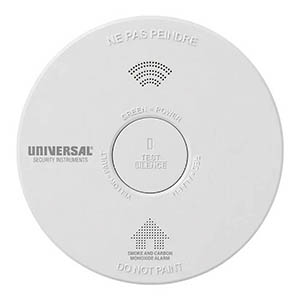


Read customer ratings and reviews for the First Alert Hardwired Combination Smoke/Carbon Monoxide Alarm with Battery Backup - SC9120B. Learn what other customers have to say about their experiences, including what they liked, how the First Alert Hardwired Ionization Smoke and CO Alarm with Battery Backup met their expectations, and any concerns they encountered. These firsthand perspectives can provide helpful information beyond the standard product description.
Browse the reviews to compare customer ratings, explore positive and critical feedback, and make a more informed purchasing decision. If you've purchased or used this product, we encourage you to share your experience and help other shoppers find the right product for their needs.